
Home » Why WIN WIN » Non-Profit Leadership
Protecting the Mission: When Your Reputation Is Your Only Currency
In mission-driven organizations, reputation is not a supporting asset. It is the foundation.
Donors give because they trust you. Volunteers commit their time because they believe in your leadership. Communities rely on your organization to operate with integrity, even under pressure.
When an internal conflict or public accusation arises, the issue is not contained to the situation itself. It becomes a test of your leadership and your values.
In this environment, you do not simply manage risk. You are responsible for maintaining moral authority.
Protecting Trust Through Principled Response
The traditional response to crisis often prioritizes silence, control, and legal containment. While this approach may feel protective in the short term, it can quickly erode the trust that sustains your organization.
When stakeholders perceive distance or defensiveness, they do not interpret it as strategy. They interpret it as avoidance.
The result is not just reputational strain. It is a loss of confidence, reduced engagement, and long-term damage to your ability to fulfil your mission.
This is where leadership matters most.
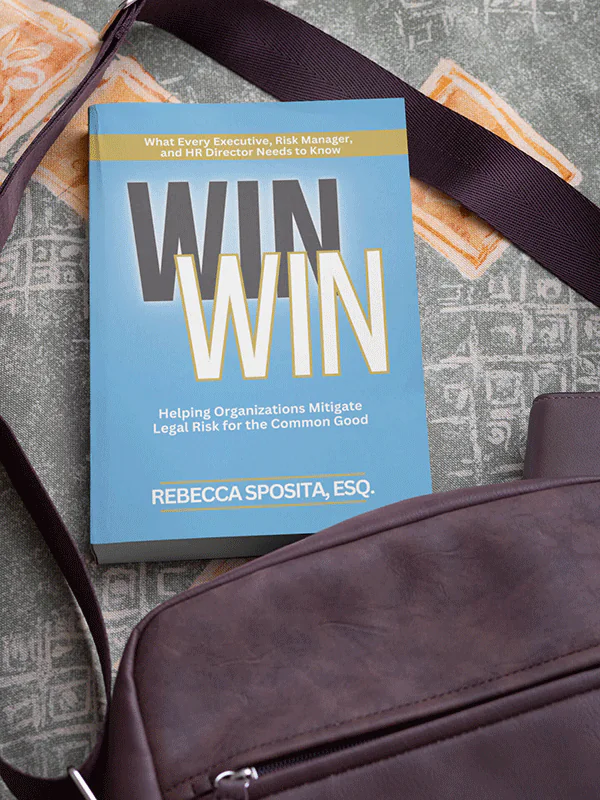
The Win-Win framework provides a structured way to respond to challenges with clarity, transparency, and consistency, allowing you to reinforce the values your organization was built on while protecting its future.
Why “Good Intentions” Are Not a Risk Management Plan
Mission-driven organizations are often built on trust, shared values, and a belief in doing the right thing.
However, good intentions alone do not create stability when a crisis occurs.
Without a defined process, decisions are made in real time, under pressure, and often without alignment. In those moments, silence or limited communication may seem like the safest option.
To donors, volunteers, and the broader community, that silence can be interpreted very differently.
It can appear as avoidance, inconsistency, or even a lack of accountability.
Over time, that perception weakens the foundation the organization depends on.
The Near-Miss Signals:
- Declining donor retention or hesitation from long-time supporters
- Increased tension or misalignment within the board
- Volunteer burnout driven by unresolved internal conflict
- Informal conversations replacing formal reporting of concerns
- Growing skepticism about leadership decisions or transparency
These are not isolated issues. They are indicators that trust is under strain and that the current approach is not sustainable.
From Institutional Betrayal to Mission Stability
The Catalyst
A volunteer, staff member, or community participant raises a concern publicly or internally. The issue has the potential to affect both the organization’s reputation and its relationships.
The Old Way (The Failure)
Leadership defaults to a controlled and defensive response. Communication is limited. The focus is on protecting the organization from exposure.
While the intent is to preserve the organization’s reputation, the outcome is often the opposite.
The Result: Secondary Assault and Institutional Betrayal
The individual who raised the concern feels dismissed or unheard. At the same time, donors and stakeholders begin to question whether the organization is aligned with the values it promotes.
This creates a compounding effect. Trust erodes internally and externally at the same time.
Funding becomes uncertain. Engagement declines. The mission itself is put at risk.
The Win-Win Way (The Success)
Using the Win-Win framework, leadership responds with a structured and transparent process.
The concern is acknowledged. The process is communicated clearly. The organization demonstrates that it is willing to examine and address the issue without unnecessary defensiveness.
This approach reinforces accountability while maintaining appropriate boundaries.
The Outcome
The organization does not simply move past the issue. It strengthens its credibility.
Stakeholders see alignment between stated values and actual behavior. Donor confidence stabilizes. Internal trust begins to rebuild.
Rather than weakening the organization, the moment becomes a demonstration of integrity.
That is what protects long-term funding and mission continuity.
Moral ROI: Protecting Donor Trust and Board Integrity
How do we handle misconduct allegations without destroying our reputation?
The key is to respond with structure and transparency rather than silence or defensiveness.
When stakeholders see that concerns are acknowledged and addressed through a clear process, confidence is more likely to be maintained. Avoiding the issue or minimizing communication often creates greater reputational damage than the original concern.
What is the measurable impact of transparency on donor retention?
Transparency supports consistency and trust over time.
Donors are more likely to continue supporting organizations that demonstrate accountability and alignment with their stated values. When trust is preserved, retention stabilizes and long-term relationships are maintained.
How can the Win-Win framework resolve unproductive board conflict?
The framework provides a shared structure for addressing concerns, which reduces ambiguity and misalignment.
When board members operate within a consistent process, discussions become more focused, decisions are clearer, and conflict is less likely to become personal or unproductive.
Does being trauma-informed conflict with our fiduciary duty to protect the organization’s assets?
It does not conflict. It supports it.
A trauma-informed approach reduces escalation, preserves stakeholder trust, and protects long-term funding. These outcomes directly align with the responsibility to safeguard the organization’s resources and sustainability.
Aligning Risk Management with Your Mission
The Win-Win framework is not an abstract philosophy. It is a structured system designed to align operational decisions with the values an organization represents.
It was developed by a trial attorney and law firm president with decades of experience managing high-stakes institutional crises. Through that work, one pattern became clear.
Organizations often protect themselves legally while unintentionally damaging the relationships that sustain them.
For mission-driven organizations, that outcome is especially costly.
A legal resolution that alienates donors, volunteers, or the community is not a success. It is a loss of the trust required to continue operating effectively.
The turning point came during her time at Harvard Business School, where it became evident that even the most established institutions lacked a consistent framework for handling internal challenges in a way that balanced accountability with trust.
The Win-Win framework was designed to close that gap.
It provides a repeatable approach that allows leaders to respond to challenges in a way that protects both the organization and its mission.
This is not a softer approach to risk. It is a more sustainable one.


Ready to Build a High-Integrity Workplace?
Whether your focus is addressing a current challenge or strengthening your organization for the future, the right framework provides clarity and stability.